Horses
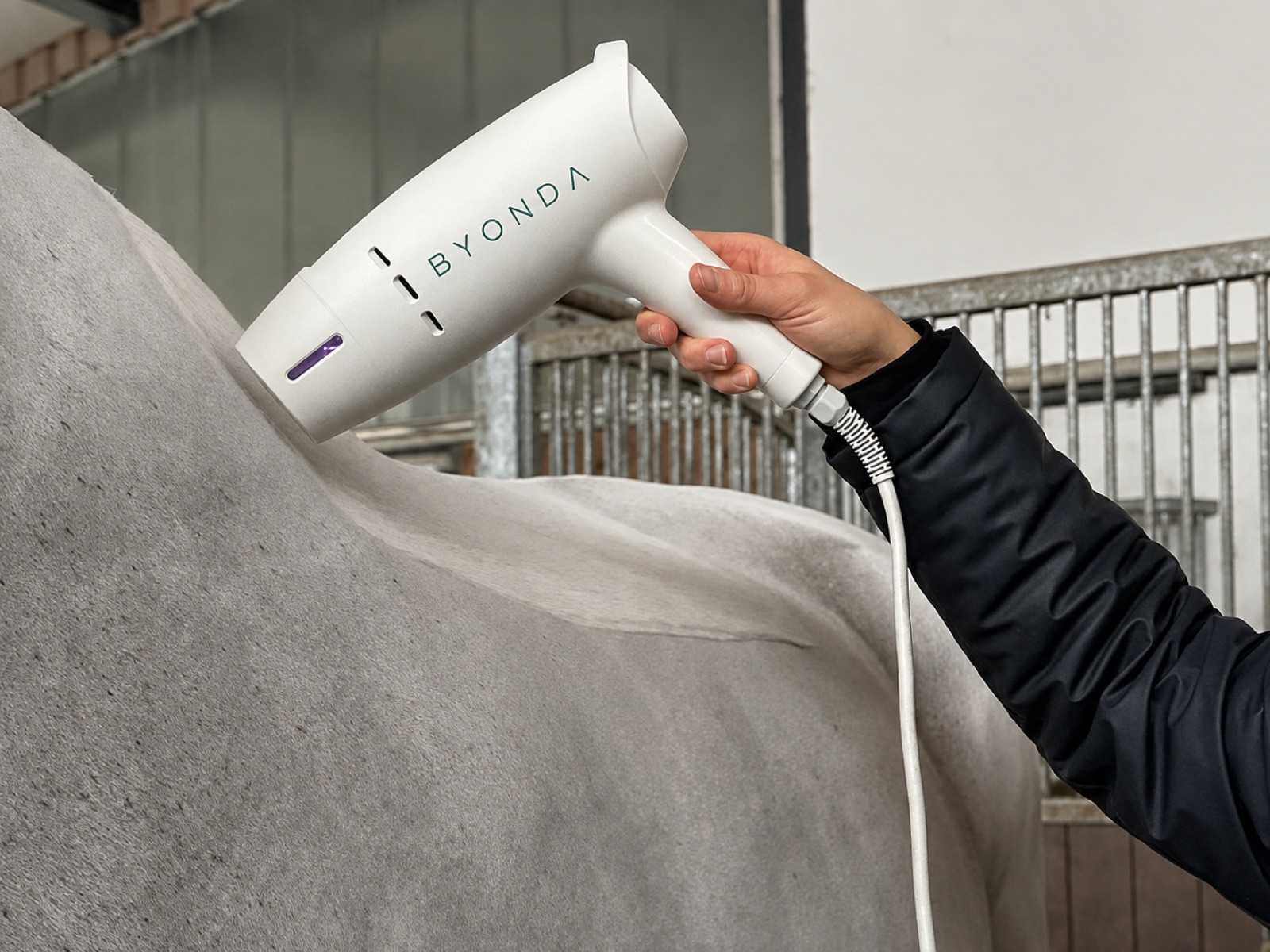
Show, sport and breed animals whose owners will not accept a shaved patch. Treated stable-side, on the yard, or at the clinic, coat intact.

Patients
Efficacy is rarely what limits a therapy cycle. Tolerance is. Contactless treatment removes the reasons a patient drops out before the course is finished.
Case record
A single equine case documented by the treating practice: the same limb, from two angles, at the start of treatment and at the end of a course of weekly sessions.
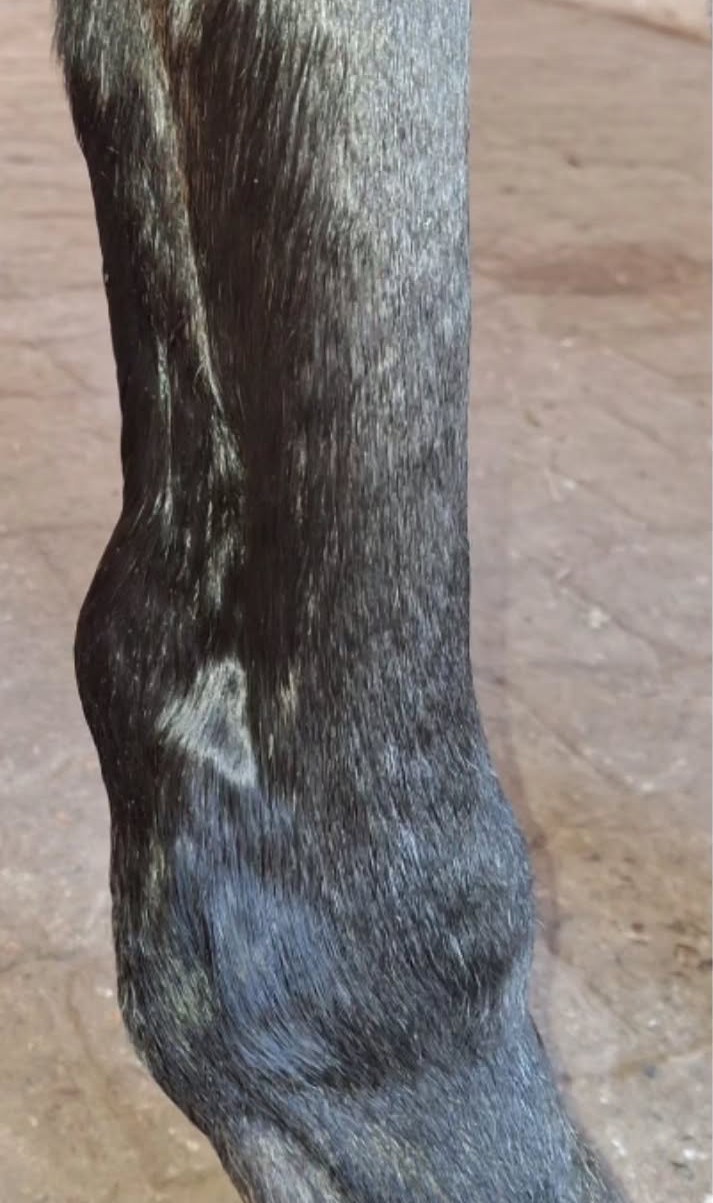
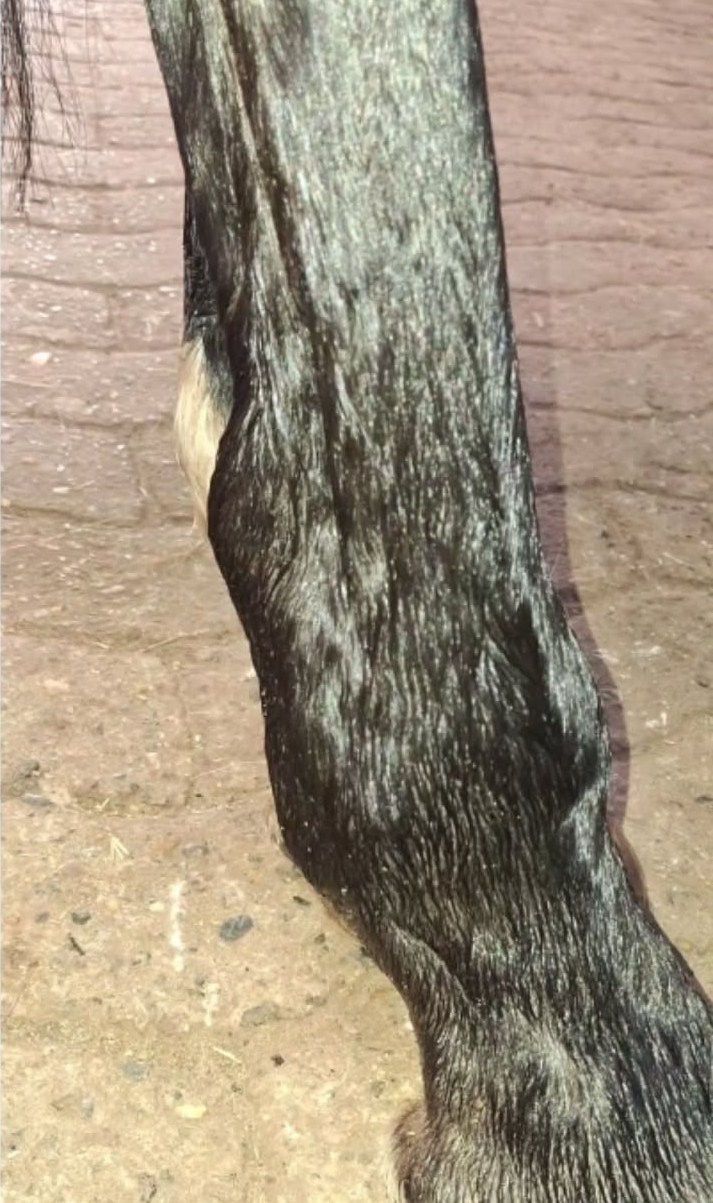
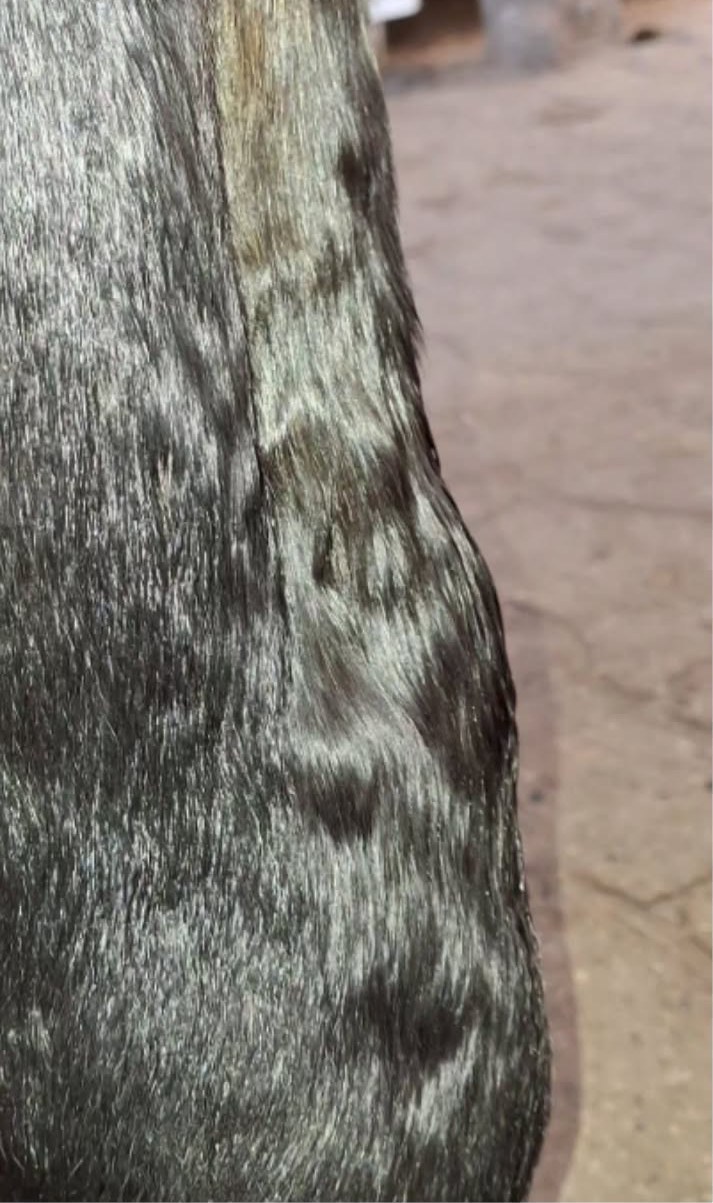
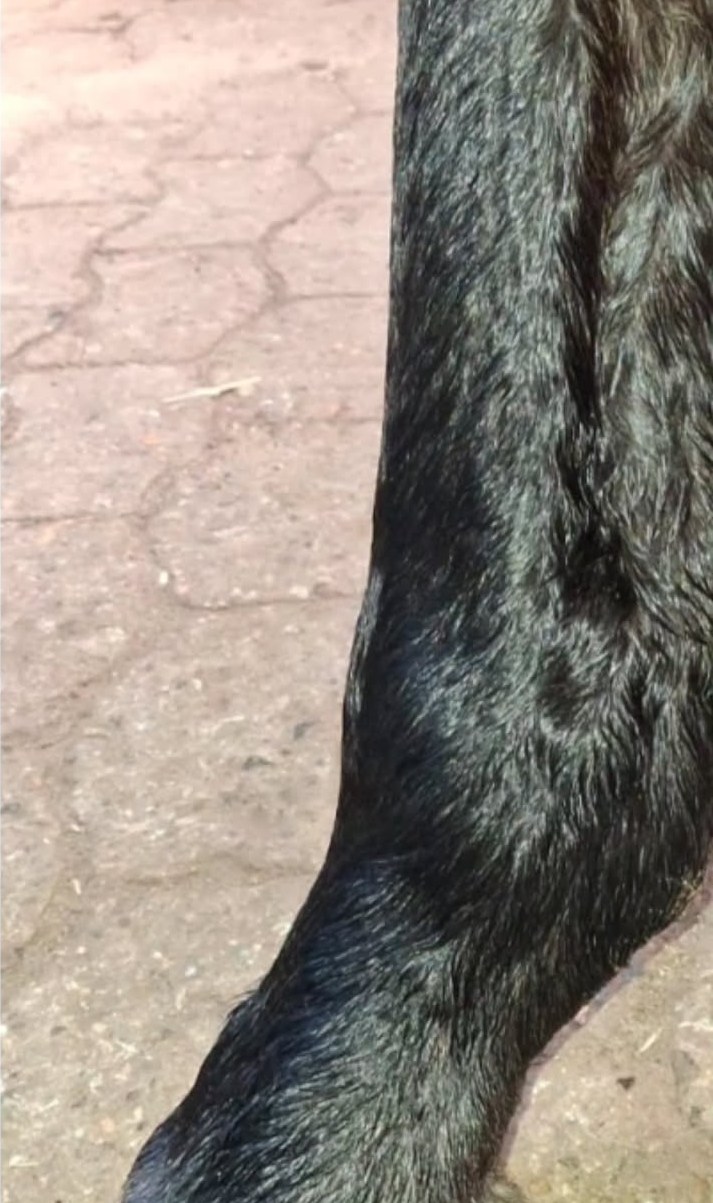
One documented case. Individual response varies, and these photographs are a practice record rather than clinical evidence.
Indications
Osteoarticular conditions and soft-tissue inflammation, acute and chronic. The combined deep field and mechanical stimulus targets pain, circulation and recovery time.
Treatment decisions remain clinical judgement.
Tendon and joint support in sport and racing strings, where a clipped patch is unacceptable.
Geriatric osteoarthritic cases that will not tolerate handling, and post-operative rehabilitation where pressure is unwelcome.
Nervous, painful or unmanageable patients for whom contact therapy has never been an option.
Who we treat
Support for recovery, performance and chronic comfort, delivered wherever the animal is calmest.
Show, sport and breed animals whose owners will not accept a shaved patch. Treated stable-side, on the yard, or at the clinic, coat intact.

Geriatric and anxious patients who will not tolerate restraint or a pressure point. Nothing held down, nothing shaved.
The session
Seven to twelve minutes from start to finish, with nothing to prepare beforehand and nothing to clear away after.
No clipping, no cream, no plate placement. The animal stands where it is comfortable.
Power, frequency and cycle count are selected from the dosimetry table for species, mass and target depth. Parameters are recorded.
The handpiece moves over the target area without touching it, with no restraint and no interruption if the animal shifts.
No cream to wipe, no coat to explain, no consumable to restock. The room is ready for the next patient immediately.
The standard cadence. Cycle length depends on the case, and because nothing deters the owner, cycles are more likely to be completed.
Open demo
We bring the device to your practice or yard and treat real patients alongside your team. No slides. The animal's response is the argument.